
The Orthogonal Possible
by Silvia Passiflora, Editor | Scriptaluna
May 4, 2026
A fellow musician reached out recently and asked what I thought of his new single. We'd had a cordial online relationship — he'd shown up in my comments occasionally, the kind of quiet presence you appreciate in a heavy season. So I went looking.
What I found was a maze. A Linktree leading to another Linktree, no title, no context — nothing that told me why I, specifically, might relate to what he'd made. Context primes the ear.
When you know why someone wrote something, you arrive at it differently. I did listen. I was curious enough for that. I just didn't have the energy to write anything about it, and a half-formed note felt worse than silence.
I wrote back warmly, told him I was in my own release cycle, wished him well. What I didn't say — because he hadn't asked, and because unsolicited infrastructure counseling is not the same thing as a listen — was that one sentence would have changed everything.
I felt a kind of guilt I recognize — seeing clearly how to help, and knowing it would be the wrong moment to offer it. He’s in a season I know well. Collecting assets. Building presence. Learning the shape of the thing. That season can’t be skipped. A blueprint doesn’t land if the foundation isn’t there yet.
What he needs is simple: one page, one link, one sentence about why he wrote the song. That’s the first chapter. The Grammy Submission Guide I wrote is chapter forty.
Fewer people, more specifically seen, will always outperform volume. I learned that the hard way — chasing turnout, messaging by name, trying to move a crowd, until I realized I was building exhaustion instead of an audience. What becomes possible depends on what comes first.
It took me a long time to understand it, and only recently did I find a name for it.
“The adjacent possible — Kauffman's term for the next logical door that opens once you've walked through the current one, popularized by Johnson in his book Where Good Ideas Come From — is what an algorithm can give you. Ask an AI what you're missing and it will scan your existing framework and hand you the next logical tile. It's genuinely useful. I use it constantly.
But there's another kind of movement entirely.
I've started calling it the orthogonal possible — the kind that arrives from a direction you weren’t even facing. It's something no AI can anticipate or replicate, because it's uniquely human."
Orthogonal is sometimes defined as perpendicular, but that doesn’t quite hold. It’s not just a turn. It’s a different axis.
The adjacent possible opens in front of you. You can sense the next step before you take it.
But some of the most defining turns don’t arrive that way. They enter from the side, unannounced, and only later reveal that they were part of the path all along.
I didn't plan to become a sommelier. I was a new hire at The Art Institute of Atlanta, bottom of the teaching totem pole, and I needed credentials. The certification sounded interesting — a logical next step for a culinary instructor. I signed up. I took the first test and thought, what am I doing, I have no idea.
But I kept going. And what I got wasn't just wine knowledge. I got a sensory language. The vocabulary of tannin and terroir and finish and the way a single grape expresses a specific hillside. That language found its way into my poetry years later in ways I never could have planned.
None of it was a plan. It was a series of sideway doors — sensory languages accumulating, intersecting eventually in the same room. The room being the work. The work being Southern Gothic Folk poetry that sounds like nothing I can point to as an influence, because the influences didn't come from music.
The orthogonal possible doesn't feel orthogonal from the inside.
It usually arrives as a practical decision. A credential you needed. A class that sounded interesting. A yes to something you were underqualified for and slightly afraid of. You can't prompt your way there. You have to live your way there.
What I can tell you is what I actually did, incrementally, over months.
I kept searching my own name in incognito mode — no login, no cached history, no algorithm that already knew who I was. Just a cold stranger typing who is Silvia Passiflora into a box. I let the engine tell me what it found. Then I asked: what am I missing? And then I extended it — what am I missing to become more discoverable to bookers? To festivals? To the Recording Academy? I adjusted. I searched again. I asked again.
That's not a strategy. It's a practice. The same patience you'd give a garden — not one dramatic intervention but repeated small ones, each one informed by what the last one showed you.
The questions got more sophisticated over time wasn't because I had a roadmap but because I could feel I was missing something, even when I didn't have the words for it yet. Feeling the gap is enough to start. You don't need the vocabulary. You just need to keep turning.
My mission with Scriptaluna Press is to be a lantern in the dark. But a lantern doesn't chase people through the dark. It stays lit in one place. The people ready to find it, find it.
I'm not teaching. I'm showing the steps I took, in the order I took them, so that if you're in a similar season you can borrow the methodology and make it yours.
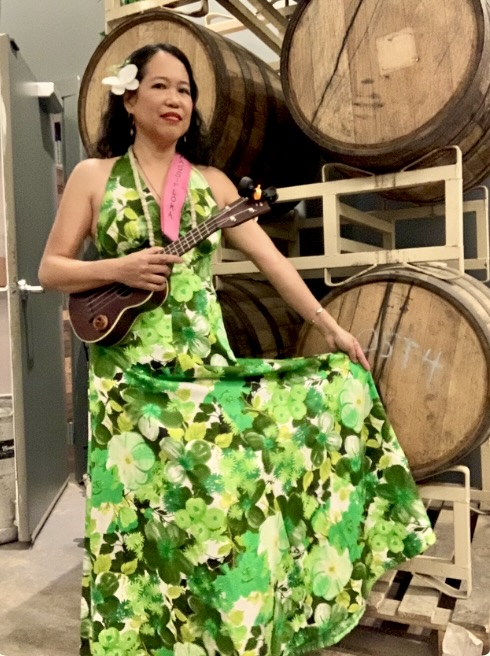
What looks like the adjacent possible — the oddball class, the sideways credential, the encounter you almost skipped — may turn out to be the orthogonal one. The thing that makes the brand unmistakable. The sommelier who plays an ukulele.
To read more content like this, visit Editor's Letters